


EV Charging at Rental Properties: 7 Mistakes You're Making (And How to Future-Proof Your Investment)
As electric vehicles become mainstream, rental property owners are scrambling to keep up. But here's the thing: most are making critical mistakes that could lead to dangerous situations, frustrated tenants, and expensive retrofits. If you're thinking about adding EV charging to your properties (or already have), you need to know about these costly errors before they bite you.
The EV revolution isn't slowing down. In fact, it's accelerating faster than most property owners realize. And while offering EV charging can be a huge competitive advantage, getting it wrong can expose you to serious liability and drain your investment returns.
Let's dive into the seven biggest mistakes property owners make with EV charging: and more importantly, how to avoid them.
Mistake #1: Letting Tenants Charge on Any Old Outlet
This is the big one. The mistake that could literally burn down your property.
Here's what most landlords don't realize: every single EV manufacturer requires their vehicles to be charged on a dedicated circuit. Not a shared circuit. Not just any outlet. A dedicated circuit that runs directly from your electrical panel to the charging point without serving any other outlets.
This isn't a suggestion: it's a hard requirement. General Motors explicitly states in their manuals that circuits must be rated for continuous high-amperage duty. Tesla, Ford, and Nissan all say the same thing. Yet property owners regularly let tenants plug into standard outlets that serve multiple receptacles.
What happens when tenants use shared circuits? At best, you'll trip breakers constantly. At worst, you're looking at electrical fires, property damage, and massive liability exposure.
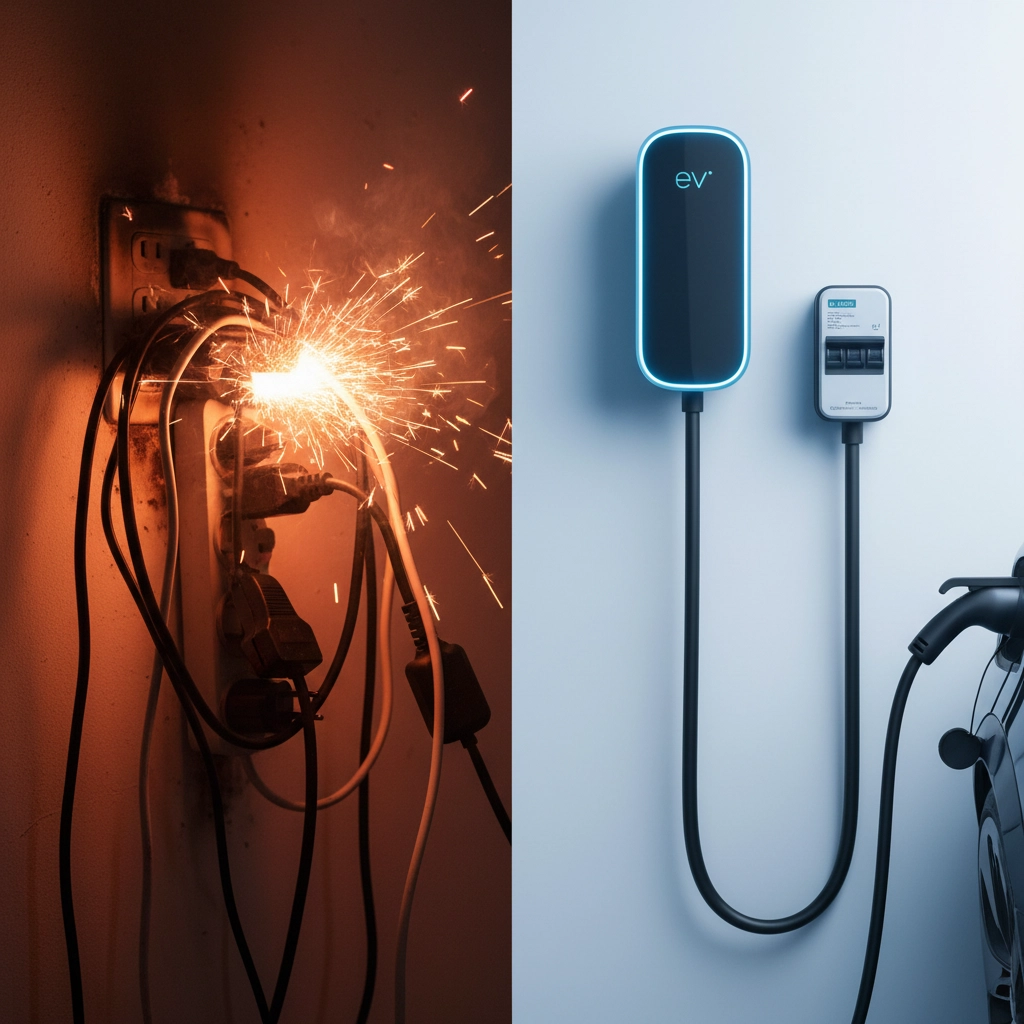
The problem is that standard 115V outlets in your rental properties simply aren't designed for the sustained load an EV demands. Outside circuits add another layer of complexity since they must be ground-fault protected by code. When you combine high amperage draw with circuit sharing, you're basically playing electrical Russian roulette.
The Fix: Before allowing any EV charging, have a qualified electrician inspect and verify that the circuit is dedicated and properly rated. If it's not, either invest in proper infrastructure or clearly prohibit charging until you do.
Mistake #2: Turning a Blind Eye to Extension Cord Charging
When tenants can't find a convenient outlet, guess what they reach for? An extension cord. And guess what every single EV manufacturer explicitly prohibits? You got it: extension cord charging.
Tesla, Ford, Nissan, and GM all ban this practice in their owner's manuals. The reason is simple: added circuit length can overload the wiring inside your property, creating fire hazards. But without clear rules in place, tenants will inevitably try this dangerous workaround.
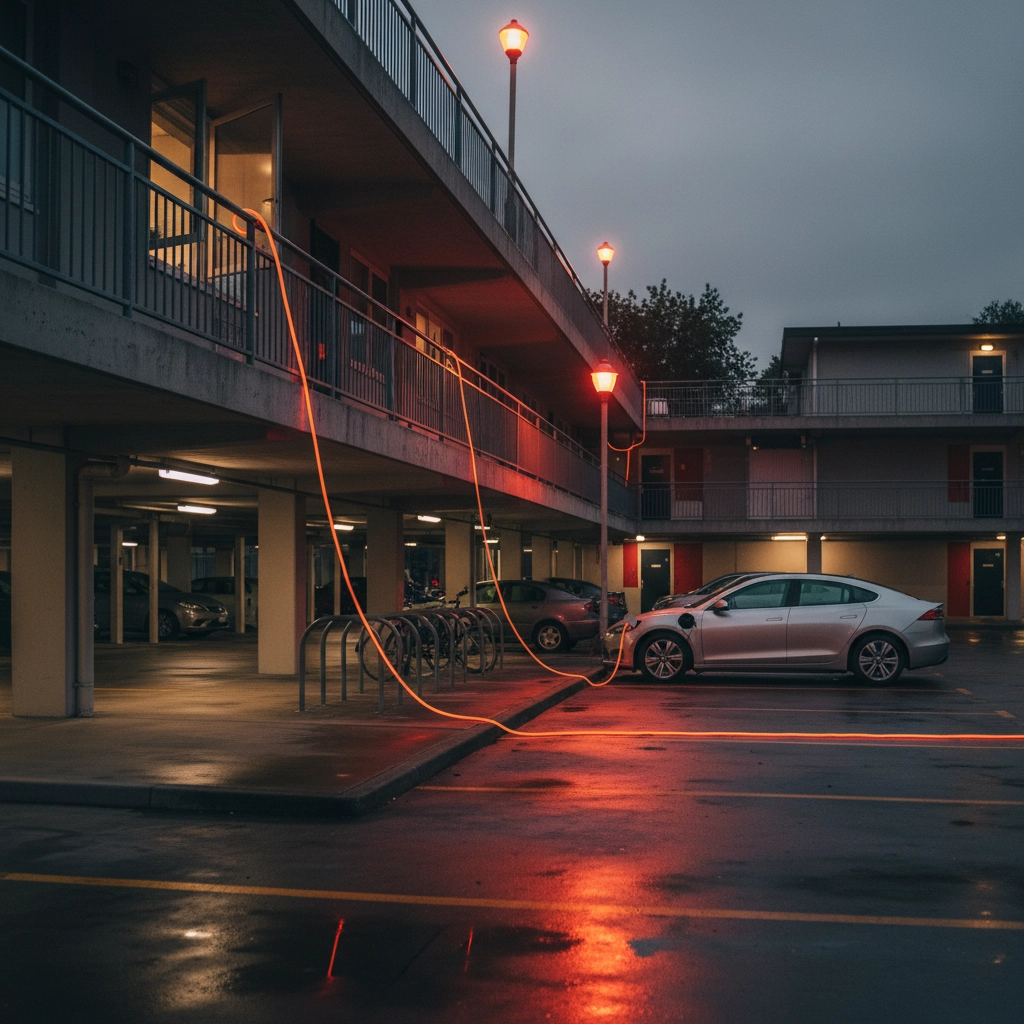
I've seen tenants run extension cords from second-floor windows down to parking areas. I've seen them daisy-chain multiple cords together to reach their cars. These aren't just code violations: they're disasters waiting to happen.
The Fix: Include specific language in your lease agreements that explicitly prohibits extension cord charging. Make it clear that any violation is grounds for immediate lease termination.
Mistake #3: Skipping the Legal Language
Here's a mistake that seems small but creates huge problems: not updating your lease agreements to address EV charging.
Without specific lease language, tenants may legally use any receptacle they can access to charge their vehicles. This creates a domino effect: once one tenant sets up an improper charging solution, others feel entitled to do the same. Some tenants have even claimed discrimination when denied charging access.
The legal exposure here is real. If a tenant causes property damage or injury due to improper charging, and you didn't have clear policies in place, you could be held liable.
The Fix: Update all lease renewals to include explicit EV charging policies. Specify what's allowed, what's prohibited, and the consequences for violations. This protects both you and your tenants by establishing clear expectations upfront.
Mistake #4: Ignoring Your Property's Electrical Reality
This is where property maintenance done right becomes crucial. Too many owners make commitments to tenants about EV charging without actually assessing whether their electrical systems can handle it.
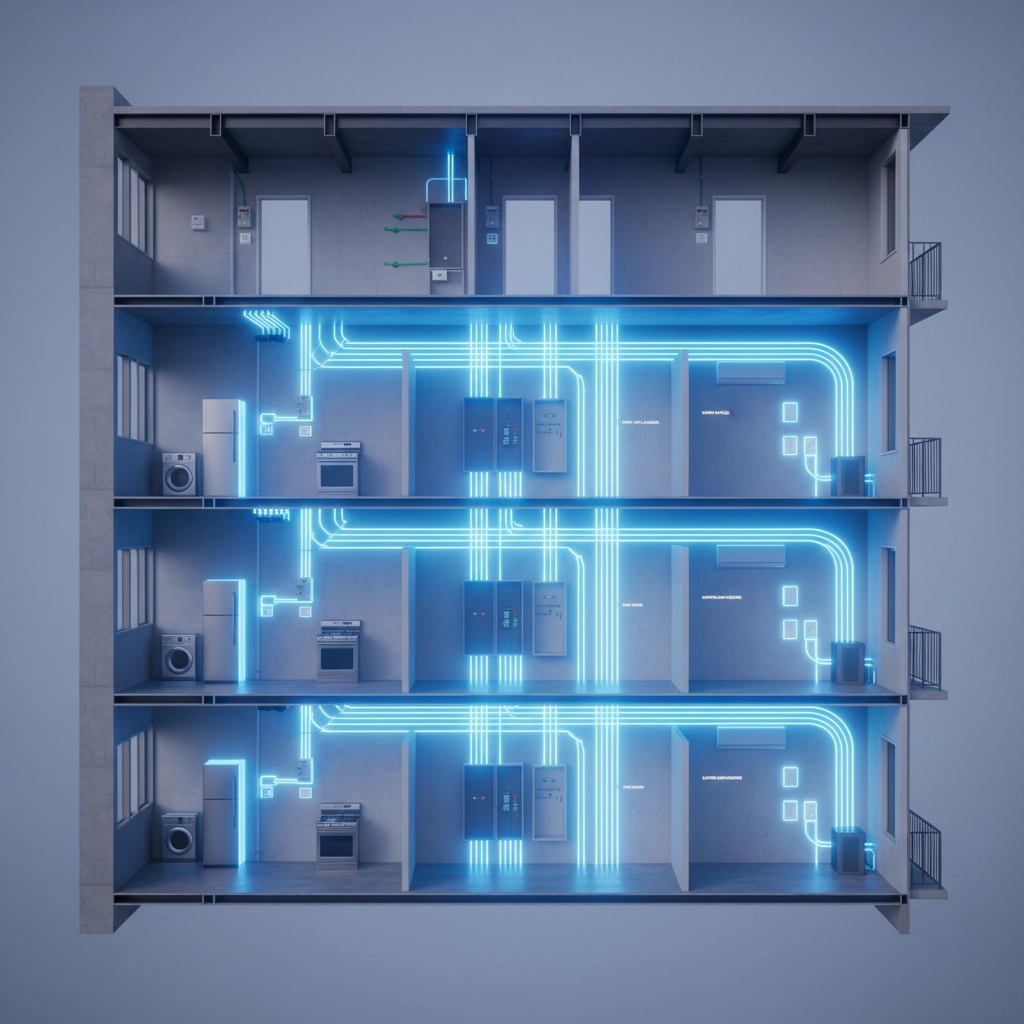
Miscalculating load capacity is one of the most common installation mistakes that can derail entire projects. You need to understand your property's current electrical capacity and what upgrades might be necessary before you start making promises.
Here's what this looks like in practice: A tenant requests charging access, and you say "sure, use that outlet in the garage" without having any idea if that outlet is on a dedicated circuit or if your electrical panel can handle the additional load. Months later, you're looking at a major electrical upgrade that costs thousands: money that comes straight out of your profits.
The Fix: Conduct a comprehensive electrical assessment before making any EV charging commitments. Have a qualified electrician evaluate your current capacity and provide upgrade recommendations if needed. Factor these costs into your decision-making process.
Mistake #5: Choosing the Wrong Charging Level
Not all EV chargers are created equal, and choosing the wrong level is a fundamental error that leads to either frustrated tenants or unnecessarily high installation costs.
Level 1 chargers (120V) are painfully slow: we're talking 3-5 miles of range per hour of charging. For most EV drivers, this is completely impractical for daily use. But Level 2 chargers (240V) provide much faster charging while requiring significant electrical work and higher upfront costs.
The key is matching the charger level to your property type, tenant demographics, and actual usage patterns. Installing Level 2 chargers at a property where tenants only need occasional top-ups is overkill. But offering only Level 1 charging when tenants depend on their EVs for daily commuting will leave everyone frustrated.

The Fix: Survey your current and prospective tenants to understand their actual EV charging needs. Match your charging infrastructure to real-world usage patterns, not theoretical maximums.
Mistake #6: Planning Only for Today's Needs
Here's where many property owners shoot themselves in the foot: they install charging solutions that barely meet current demand, then face expensive retrofits as EV adoption explodes.
Not checking with residents to understand charging demand is just the first part of this mistake. The bigger issue is failing to anticipate how quickly the EV landscape is changing. Battery capacities are increasing, charging speeds are getting faster, and adoption rates are accelerating beyond most predictions.
Installing the minimum viable charging today often means you'll be ripping it out and starting over in just a few years. That's not smart property maintenance: that's throwing money away.
The Fix: Build scalability into your initial installation. Install conduit and electrical capacity for additional chargers even if you're only activating a few stations now. Consider modular systems that can be easily expanded or upgraded without complete infrastructure overhauls.
Mistake #7: Overlooking Operations and Compliance
The excitement of installing shiny new EV chargers often gives way to frustration when property owners discover that operating and maintaining them is more complex than anticipated.
This mistake has two parts: compliance issues and operational realities.
On the compliance side, local regulations vary significantly. Some areas have specific rules about installation locations, electrical permits, and safety standards. Others offer substantial incentives that can offset installation costs. Taking a slopshod approach to compliance leads to failed inspections, legal trouble, and expensive do-overs.
On the operational side, many solution providers aren't prepared to offer real support when things go wrong. And things will go wrong: chargers break, software glitches occur, and tenants have questions. If your provider disappears when you need help, you're stuck with non-functional amenities and frustrated tenants.
The Fix: Research local regulations thoroughly before starting any installation. Work only with electricians who have specific EV charging experience. When selecting providers, make service availability and operational simplicity key criteria. Test systems hands-on during demos and ask hard questions about ongoing support.
Future-Proofing Your EV Investment
The most expensive part of EV charging isn't the equipment: it's fixing these mistakes after the fact. Getting it right the first time prevents costly do-overs and creates a competitive advantage that attracts quality tenants.
Consider who will pay for electricity: whether you'll pass costs to tenants through submetering, include it in rent, or partner with a third-party charging network. Plan for scalability from day one, because EV adoption is only accelerating.
The rental property landscape is shifting toward EV accommodation being an expectation rather than a luxury amenity. Property owners who plan carefully, avoid these common mistakes, and build in scalability will find themselves ahead of the competition with satisfied tenants. Those who take shortcuts or ignore the complexities face safety hazards, unhappy residents, and expensive retrofits.
Property maintenance done right means thinking beyond today's immediate needs and building infrastructure that serves you well for years to come. With EV charging, that approach isn't just smart business; it's essential for protecting your investment and your tenants.
Comments